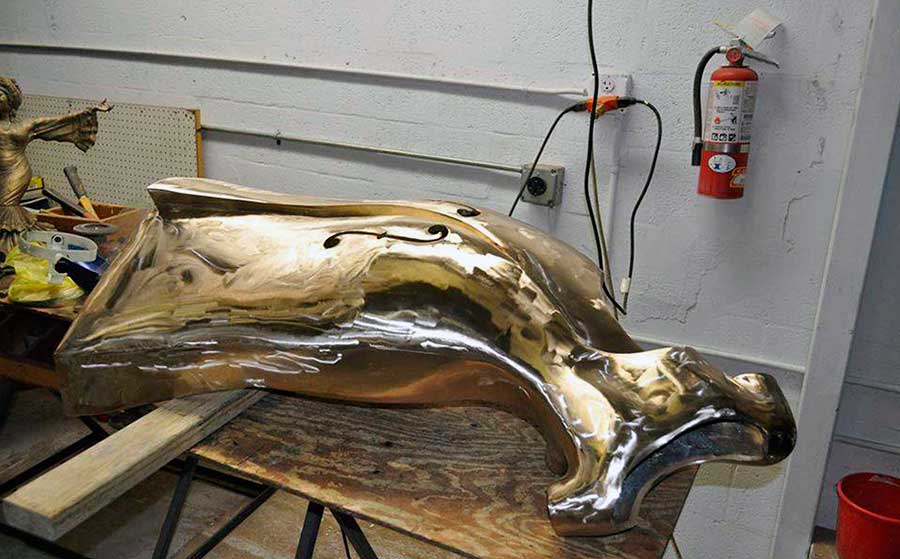
How patinas define the aesthetics, artistic intention, and durability of a monumental sculpture.

Gradient patina detail on bronze sculpture — R.U.N. Art Foundry
Patina transition on Armonía sculpture: example of professional finishing

The patina is one of the most important elements of a bronze sculpture. It not only defines the final aesthetic but also the artistic intention, visual atmosphere, and finish durability. At R.U.N. Art Foundry, we offer a variety of indoor and outdoor patinas adapted to each project needs.

What is a Patina?

It is a controlled reaction that changes the color and surface of bronze through chemicals and heat. This process transforms metal into a work with unique personality.

Types of Patinas

We offer dark, light, green, brown, satin, and high-contrast patinas. Each produces a different sensation and adapts to different artistic contexts.

Indoor and Outdoor Patinas

Indoor patinas have a more delicate finish, while outdoor ones must be more resistant and stable against humidity and sunlight. Our custom solutions include specific treatments for each environment.

Applied Examples

In projects like our collaboration with Carole Feuerman, we create patinas that respect the artist vision and ensure long-term stability.


Consult About Patinas for Your Project

Our team can advise you on the ideal patina for your sculpture.

Explore Our Capabilities

View Our Services
View Recent Projects

Frequently Asked Questions About Bronze Patinas

What is patinated bronze?

Patinated bronze is bronze that has been treated with chemicals and heat to create a colored surface finish. The patina can range from deep brown and black to vibrant greens, blues, and reds. At R.U.N. Art Foundry, we use traditional patination techniques refined over decades to achieve finishes that are both beautiful and durable.

How does bronze patina over time?

Bronze naturally develops a patina through exposure to air and moisture — a process called oxidation. Outdoor bronze sculptures gradually develop a green patina (verdigris) over years. Professional foundries like ours accelerate and control this process to achieve the exact bronze patina color the artist envisions, then seal it with protective wax coatings.

What are the most popular bronze patina colors?

The most requested bronze patina finishes include: French Brown (warm chocolate tones), Liver of Sulfur (deep black-brown), Verde Green (classic aged copper look), Renaissance Gold (warm golden highlights), and Ferric Nitrate (reddish-brown earth tones). Each patina technique produces distinct results depending on application method and bronze alloy.

Can you patina a bronze statue after casting?

Yes — patination is always applied after the bronze sculpture casting is complete. The bronze statue must first be chased, welded, and sandblasted to prepare the surface. Then the patina artist applies chemicals with a torch, building layers of color. This is one of the final steps in the lost-wax casting process.

How long does a bronze sculpture patina last?

A professionally applied patina on a bronze sculpture lasts decades with proper care. Indoor pieces may never need re-patination. Outdoor bronze statues benefit from annual wax application to maintain their finish. Our conservation and restoration service can refresh patinas on existing sculptures.


Explore Services
Request Consultation